
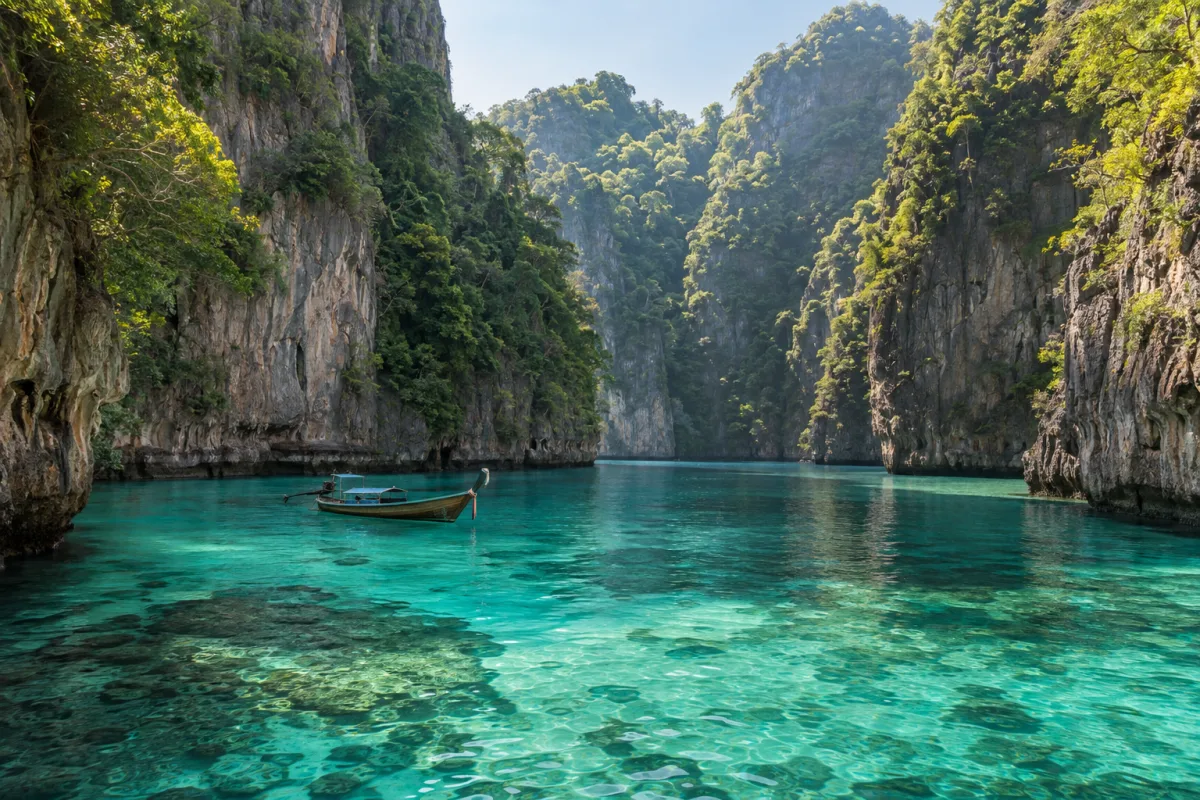
Pileh Lagoon is a narrow seawater inlet enclosed by the limestone cliffs of Ko Phi Phi Leh in Krabi Province. Also called Pi Leh Bay and known locally as an inner sea, it is part of Hat Noppharat Thara–Mu Ko Phi Phi National Park. Its sheltered water, sheer rock walls and brilliant green-blue colors make it one of the most recognizable landscapes in southern Thailand.
Why Pileh Lagoon is special
The lagoon lies inside a deep opening in Phi Phi Leh’s karst coastline. High cliffs rise directly from the sea and partially shelter the water from the open Andaman Sea. Sunlight, water depth, cloud cover and the tide can shift its appearance from pale turquoise to deep emerald within the same visit.
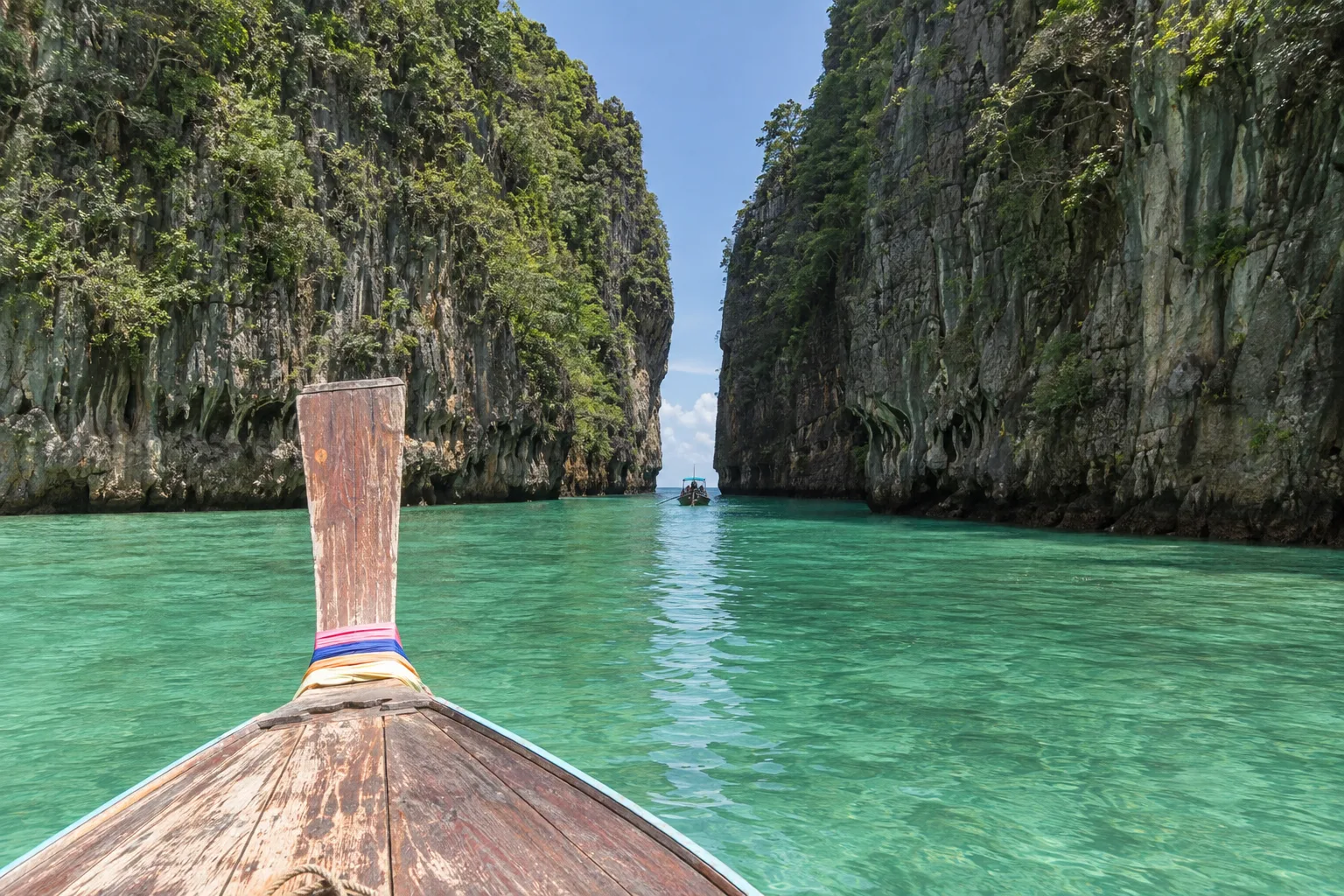
Pileh is primarily a place for experiencing scenery from the water. Unlike a conventional beach destination, its defining features are the boat passage, the surrounding rock walls and the view through the narrow entrance. Visitors should not expect a developed waterfront, shops or resort facilities inside the lagoon.
Where is Pileh Lagoon?
Pileh Lagoon is located on Ko Phi Phi Leh in the Phi Phi archipelago, within Mueang Krabi District. Phi Phi Leh is the protected, uninhabited island that also contains Maya Bay. It is separate from Ko Phi Phi Don, the inhabited island where accommodation, restaurants and Tonsai Pier are located.
How to reach the lagoon
Access is by sea. Travelers commonly visit aboard a long-tail boat or speedboat departing from Phi Phi Don, Krabi or Phuket. The exact route depends on the operator, sea conditions, park instructions and the wider itinerary. Confirm that Pileh Lagoon is included before booking, because a general Phi Phi tour does not always guarantee entry into every bay.
- A long-tail boat offers a traditional, open-air experience and a low viewing angle close to the water.
- A speedboat is commonly used on multi-stop trips approaching the islands from farther departure points.
- A private charter may provide more control over the route, but access still depends on weather, tides and official instructions.
- Landing on Phi Phi Leh is restricted to designated visitor areas; Pileh Lagoon itself is experienced from the water.
What to expect on arrival
The approach reveals a narrow channel between steep cliffs before the water opens farther inside. Conditions can feel peaceful when few vessels are present, but the lagoon is also a popular stop and may become busy. Boat movement, sunlight and the number of visitors all affect visibility, noise and the experience.
Whether swimming or snorkeling is permitted can vary with local management, marine conditions and instructions issued on the day. Follow the boat crew and national park officers. Do not assume that every part of the lagoon is open for entering the water.
When to visit
The Phi Phi Islands generally receive calmer, drier conditions from November through April, while the southwest monsoon can bring more rain, waves and itinerary changes during other months. This is a seasonal pattern rather than a guarantee. Marine forecasts and official announcements should guide any decision to travel.
Morning light often illuminates the water attractively and earlier departures may encounter fewer tour boats. Tide level also influences water depth and boat access. Ask the operator how the expected tide and weather could affect the visit instead of choosing only by the advertised itinerary.
What to bring
- Swimwear and a light cover-up suitable for traveling between the islands
- A properly fitted life jacket supplied by the operator
- A hat, sunglasses and sun-protective clothing
- Reef-conscious sunscreen applied before entering sensitive marine areas
- A reusable water bottle secured so it cannot fall overboard
- A dry bag or splash-resistant case for electronics
- A waterproof camera strap and a cloth for sea spray
Safety and responsible travel
Pileh Lagoon is inside a protected national park and should be treated as a natural habitat rather than a water playground. Thailand’s marine-conservation guidance prohibits touching or stepping on coral and marine life, feeding aquatic animals and discarding waste into the sea. Snorkelers should wear a life jacket and keep away from coral.
- Follow park officers and the boat crew immediately when conditions change.
- Keep hands, feet and fins away from rock surfaces, coral and marine animals.
- Never throw food, cigarette ends, plastic or wastewater into the lagoon.
- Use mooring arrangements approved for the area and do not encourage anchoring on coral.
- Keep music and shouting to a minimum around wildlife and other visitors.
- Take every item brought into the lagoon back to shore.
Photography tips
A wide-angle lens helps show the scale of the cliffs, while a lower viewpoint near the boat’s edge emphasizes the transparency and color of the water. Protect equipment from spray and keep bags secured. If using a drone, obtain all permissions required by Thai aviation rules and the national park; do not launch merely because another visitor is flying.
Pileh Lagoon and Maya Bay are not the same place
Both attractions are on Phi Phi Leh, but they offer different experiences. Pileh is a long, cliff-enclosed lagoon explored by boat. Maya Bay is a separate bay known for its curved beach and tightly managed visitor access. A tour may include both, although entry to each location remains subject to park rules and conditions.
Frequently asked questions
Can you stay overnight at Pileh Lagoon?
No accommodation is available inside Pileh Lagoon or elsewhere on protected Phi Phi Leh. Travelers normally stay on Phi Phi Don, in Krabi or in Phuket and visit by boat.
Can you reach Pileh Lagoon without a boat?
No. The lagoon is enclosed by steep terrain and has no road or public walking approach. Access is by authorized boat.
Is Pileh Lagoon suitable for children?
Suitability depends on sea conditions, the child’s comfort on boats and the operator’s safety policy. Children should wear correctly sized life jackets and remain under close adult supervision throughout the trip.
Is swimming always allowed?
No. Permission can depend on current park measures, boat traffic and marine conditions. Follow instructions given at the site and remain aboard when entering the water is not permitted.
Final planning checklist
- Confirm that the itinerary specifically names Pileh Lagoon.
- Check the marine forecast and current national park announcements.
- Ask whether conditions are expected to affect entry or water activities.
- Choose an operator that provides life jackets and explains conservation rules.
- Pack sun protection, drinking water and a secure dry bag.
- Leave no waste and follow all instructions inside the protected area.