
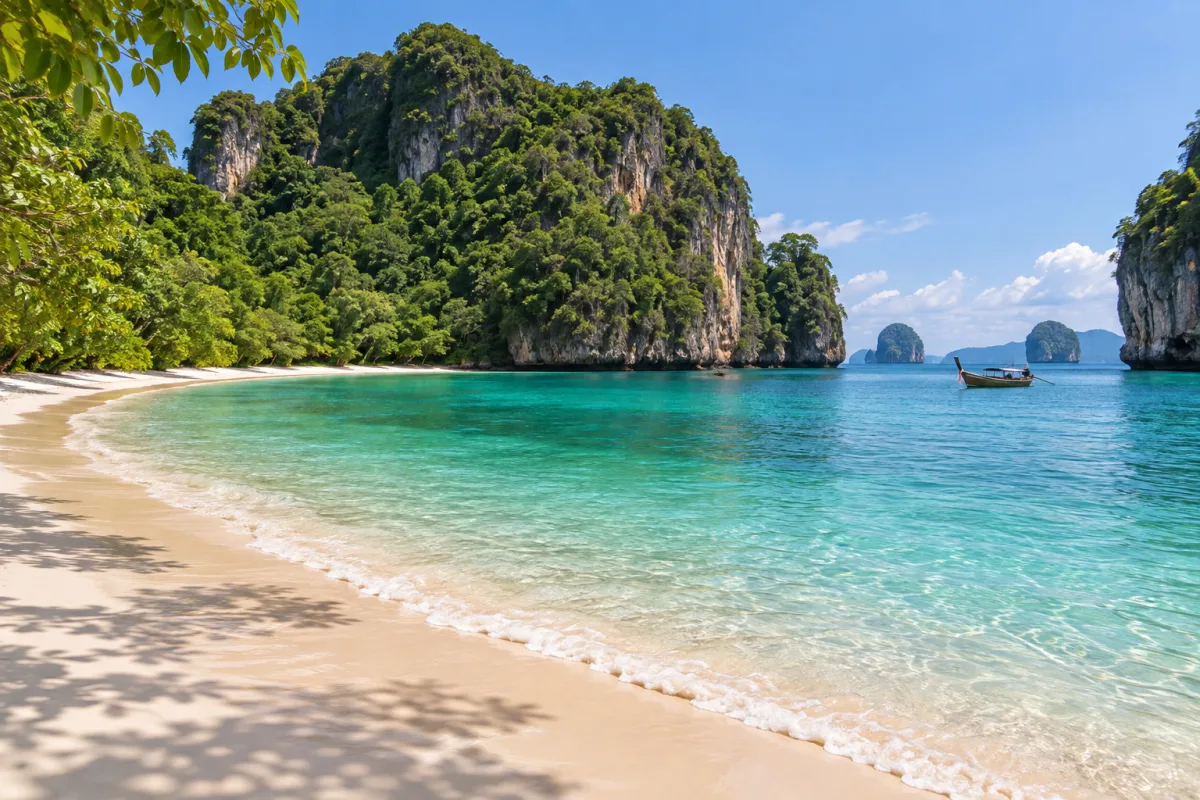
Ko Hong, also called Ko Lao Bi Le, is a limestone island in Krabi’s Hong Islands group, within Than Bok Khorani National Park. Its defining landscapes include a crescent-shaped beach, steep green karst cliffs and Hong Lagoon, a sheltered seawater basin reached through a narrow opening. The island is a boat-access destination, commonly visited on day trips from the Krabi coast.
Where is Hong Island?
Ko Hong lies off the coast of Krabi in the Andaman Sea, in the Nong Thale area of Mueang Krabi District. It is the largest island in the Hong Islands group, a collection of islands and small islets protected within Than Bok Khorani National Park. The island has no road connection to the mainland, so visitors arrive by boat.
The name Hong means “room” in Thai and is associated with the enclosed lagoon tucked behind the island’s limestone walls. The Hong Islands are distinct from the Phi Phi Islands, even though both are popular boat-trip destinations in Krabi.
What to see on Ko Hong
The crescent-shaped beach
Ko Hong’s main beach curves along a sheltered bay beneath forested limestone slopes. The pale sand and clear water make it a natural place to pause, swim when permitted and enjoy the island scenery. Conditions and visitor access can change, so follow park signs and instructions rather than assuming every area is open.
Hong Lagoon, or Thale Nai
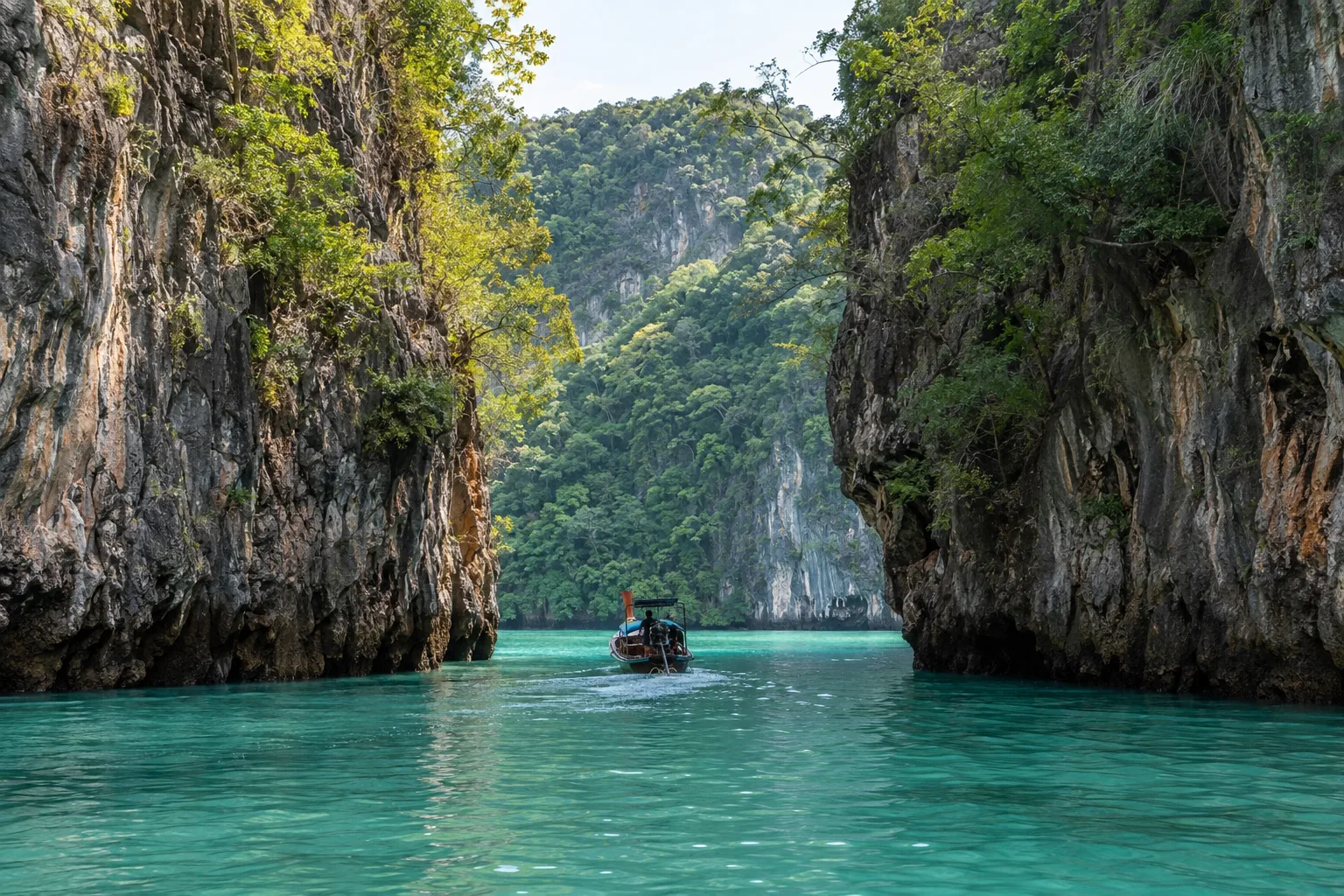
Hong Lagoon is an enclosed-looking seawater basin surrounded by steep limestone cliffs. A narrow natural passage connects it with the sea. It is a memorable place to see from a boat or, where conditions and rules allow, by kayak. The water level and access through the entrance can vary with the tide; boat crews and park staff determine what is suitable on the day.
The panoramic viewpoint
A viewpoint on Ko Hong offers a broad view across the island and surrounding Andaman seascape. The route involves stairs and an uphill climb, so allow for heat, sun exposure and physical effort. Wear secure footwear, bring drinking water and follow any posted access guidance. The view and trail conditions may be affected by weather or temporary park directions.
How to get to Hong Island
Visitors reach Ko Hong by boat from the Krabi mainland. Common departure areas include Ao Nang and Noppharat Thara, while the exact pier and route depend on the tour or charter selected. There is no scheduled road route to the island. Confirm the meeting point, what the trip includes and whether the itinerary visits the beach, lagoon and viewpoint.
- Long-tail boats offer an open-air, traditional way to travel between the mainland and nearby islands.
- Speedboats are another option offered by some operators; comfort depends on sea conditions and the vessel.
- A group tour follows its planned route and timing, while a private charter may allow a more flexible itinerary, subject to conditions and park rules.
- Boat access and lagoon entry may be adjusted for tides, weather, safety or conservation measures.
Can boats enter Hong Lagoon at any time?
No. The lagoon entrance is narrow and shallow, so whether a boat can pass depends on the water level and conditions at the time. When the water is too low, boats may be unable to enter. Do not assume that a tour’s departure time guarantees lagoon access; ask the operator how tide conditions affect its route and follow the crew’s decision on the day.
Kayaking may be offered by some operators, but availability, permitted routes and conditions vary. Use only approved equipment and follow instructions. Never force a craft through a shallow passage or enter water when the crew or park staff advises against it.
Best time to visit
The Andaman coast generally has calmer, drier conditions during part of the northeast monsoon season, while the southwest monsoon can bring more rain, waves and itinerary changes. These are broad seasonal patterns, not a guarantee for a particular date. Check the marine forecast and current national park announcements before booking or departing.
Tide timing matters especially for lagoon access, and it changes from day to day. Ask the operator whether the planned schedule aligns with the expected conditions. Weather, sea state and conservation decisions may still require a route change.
What to bring
- Swimwear and a light change of clothes
- Sun protection, such as a hat and long-sleeved cover-up
- Drinking water in a reusable bottle
- Secure footwear for wet surfaces and stairs
- A dry bag or splash-resistant case for electronics
- Any personal medication needed during a boat trip
- A reusable bag for carrying all rubbish back
Safety and responsible island travel
Ko Hong is part of a protected national park. Help protect the island by following official directions, using authorized boat services and leaving natural features undisturbed. Marine conservation guidance in Thailand advises visitors not to touch or step on coral or marine life, feed aquatic animals or throw waste into the sea.
- Wear a life jacket when required and listen to the boat crew’s safety briefing.
- Do not touch, stand on or collect coral, shells, wildlife or plants.
- Keep a safe distance from boats, cliffs and other hazards in the water.
- Stay on marked or permitted visitor routes and respect closures.
- Do not leave food packaging or other waste on the beach or in the lagoon.
- Use reef-conscious sun protection and avoid applying products immediately before entering sensitive marine areas where possible.
- Do not fly a drone unless you have the permissions required by Thai law and the park.
Hong Island or the Four Islands tour?
Hong Island and Krabi’s Four Islands are different island routes. Hong Island lies north of Ao Nang and is associated with its beach, lagoon and viewpoint. The Four Islands route visits a separate group of islands off the coast. If you have limited time, choose based on the landscapes and activities you most want, and confirm the actual stops listed by the operator.
Frequently asked questions
Is Hong Island in Than Bok Khorani National Park?
Yes. Ko Hong and the surrounding Hong Islands are protected within Than Bok Khorani National Park in Krabi Province.
Can you stay overnight on Hong Island?
Hong Island is generally visited as a day-trip destination, and visitors should not assume that overnight accommodation is available. Check current national park information for any permitted facilities or access changes.
Can you swim in Hong Lagoon?
Whether swimming is allowed depends on current park rules, conditions and instructions on site. Follow the crew and park staff, and do not enter the water if access is restricted or conditions are unsuitable.
Is Hong Island suitable for children?
It can suit families who are comfortable with a boat journey, beach conditions and any stairs included in their plan. Children should wear properly fitted life jackets on the boat and remain under close adult supervision near water, cliffs and stairways.
Do all Hong Island tours visit the lagoon and viewpoint?
Not necessarily. Routes and stop durations differ. Confirm specifically whether Hong Lagoon and the viewpoint are included, and understand that weather, tide or official directions may change the itinerary.
Hong Island trip checklist
- Choose a departure point and confirm the exact pier or meeting location.
- Ask whether the beach, lagoon and viewpoint are included in the planned route.
- Check tide, weather and park guidance close to the travel date.
- Bring sun protection, water, secure footwear and a dry bag.
- Follow the crew’s safety instructions and any access restrictions.
- Take all rubbish back to the mainland and leave wildlife undisturbed.